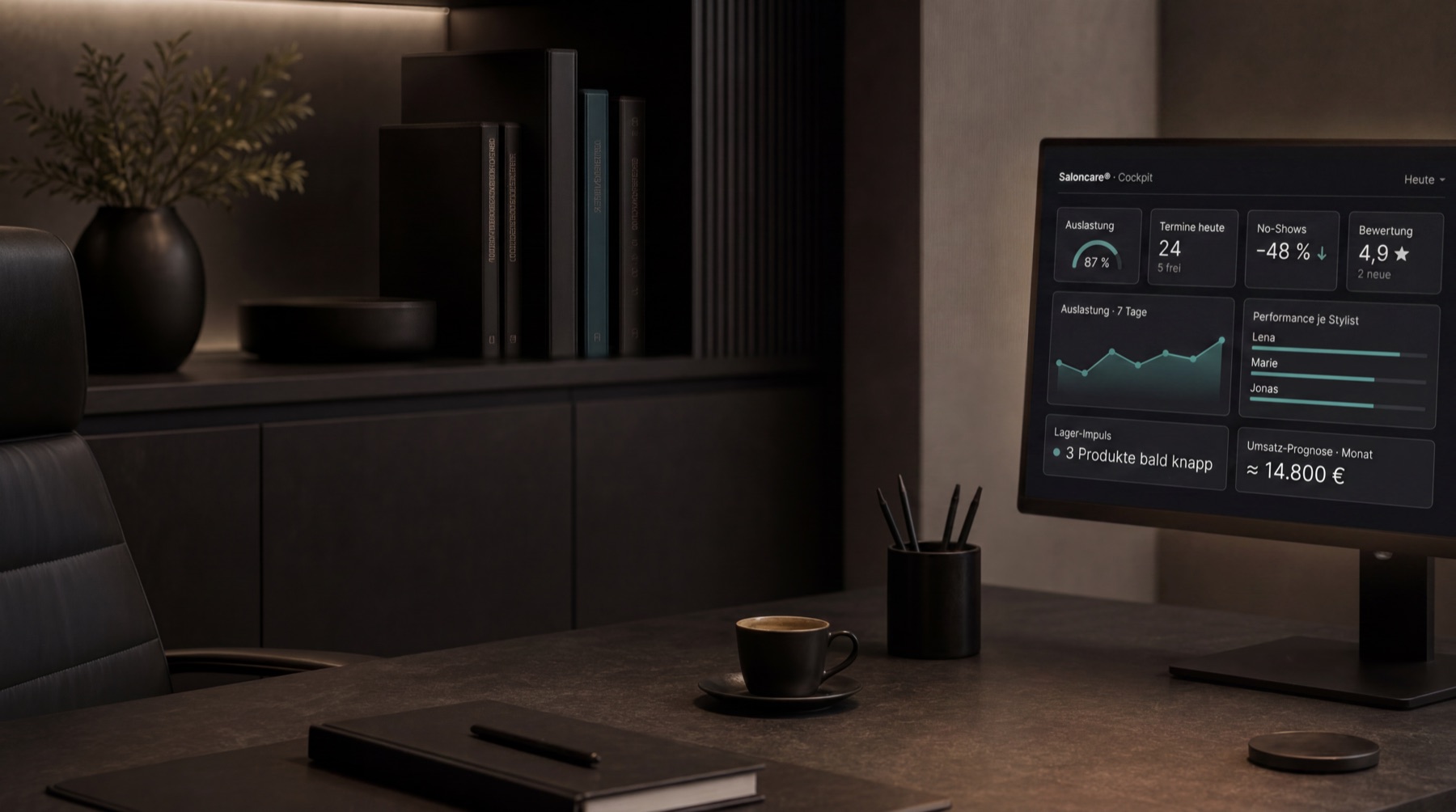
Shifts planned around demand
Saloncare proposes the staffing from utilisation, season and weekday. You drag shifts into place, and the system warns you when a day is under or over staffed.
Solution: staff planning
Quiet on Tuesday, full on Saturday: Saloncare recognises the rhythm of your week and proposes a rota that puts your team on the floor when the demand is there. More full chairs, less paid idle time. You decide, the system does the maths.
The problem
The rota is rebuilt in someone's head every week, often by habit rather than by demand. On a quiet Tuesday too many are in, on a full Saturday too few.
Staff is the largest cost block in a salon. If the staffing does not match the demand, it costs twice: paid idle time on weak days, lost appointments and stress on strong ones. Both usually only surface at the end of the month, when the wage bill does not match the utilisation.
Features
Saloncare proposes the staffing from utilisation, season and weekday. You drag shifts into place, and the system warns you when a day is under or over staffed.
The system learns from recent weeks which days and hours fill up and staffs accordingly, instead of planning every Tuesday like every Saturday.
Leaner on weak days, stronger on busy ones. Paid idle time falls, and the chairs are full when the demand is there.
How it works
You set the frame: opening hours, the staffing you want and your team's availability. Saloncare matches that against expected demand and proposes a plan you can keep, change or discard.
The salon runs at the right tempo, even on the day you are not there yourself.
Tasks and reward
The rota says who is in. This part says what needs doing, and makes visible who gets stuck in.
In a busy salon the small daily jobs get lost: restocking, setting up the station, putting out fresh towels. Saloncare turns them into a clear list rather than a request called out in passing.
Quiet extra work turns into clear rules: the salon runs more smoothly, and effort pays off instead of being taken for granted.
Impact
The figures below are illustrative examples. They show the direction, not a promise; your real values are in the cockpit.
Sam
“Sam, propose the rota for next week.”
Sam looks at how the weekdays have been filling up lately, plans a lean quiet Tuesday and a strong full Saturday and puts a draft in front of you that you can keep, change or discard.
How it fits together
Staff planning belongs to the cockpit, the pillar for running the salon. It reaches into the others: expected demand comes from the salon memory, and time tracking runs through your calendar and feeds the performance picture in Saloncare® Pro, your team's tool.
Saloncare® is the operating system for the modern salon. Staff planning is one of its jobs, not an island tool beside it.
Questions
Not today, but we are working on it. Saloncare® integrates with existing booking and point of sale systems and lays an intelligent layer over them. Bookings and payments stay in your system; staff planning uses that data to propose shifts that match demand.
Not at the moment. Planning follows demand, availability and statutory working times. Judging individual skills or tracking training requires a great deal of knowledge about each person; we are deliberately saving that for later rather than doing it halfway.
Saloncare® records arrival and departure per person through your calendar and sets target against actual. That gives you the data basis for your documentation. The legal assessment in your particular case is something to settle with your tax adviser or payroll provider.
Yes. Availability, holidays and swap requests are entered by your team. You approve or decline. The collecting moves away from you, the decision stays with you.
You record what needs doing in the salon and hand it to the whole team or to individuals. Each person sees their tasks for the day. Completed tasks earn points that your team can redeem against holiday days, products or small extras.
No. Each sees their own plan, their own hours and their own targets. The overall picture of team, utilisation and cost is available only to management, in the cockpit.
You start by importing your employees and their working time models. Usually the first rota you can review is in place within the first week; the proposals get more precise the longer Saloncare® knows your demand.
The world's best salons run on Saloncare®.